



How to Cook Pad Thai – A Step-by-Step Guide to Thailand’s Iconic Dish
Pad Thai is one of Thailand’s most beloved street food dishes—and for good reason! With its perfect balance of sweet, sour, salty, and spicy flavors, Pad Thai is a must-try and a must-learn for any Thai food lover. At our Thai Cooking Class in Phuket, it’s one of the most popular recipes students love to make—and eat!
Whether you’re cooking for the first time or just want to perfect your skills, here’s a simple step-by-step guide to making authentic Pad Thai at home.
🥢 Ingredients:
Here’s what you’ll need for 1–2 servings:
- 150g rice noodles (soaked in warm water until soft)
- 2 tbsp vegetable oil
- 2 cloves garlic, minced
- 100g chicken, shrimp, or tofu (your choice of protein)
- 1 egg
- 1 cup bean sprouts
- 2 tbsp roasted peanuts, crushed
- 1 spring onion, sliced
- 1 tbsp pickled radish (optional)
- 1 lime, cut into wedges
For the Sauce:
- 1.5 tbsp tamarind paste
- 1 tbsp palm sugar (or brown sugar)
- 1 tbsp fish sauce
- 1 tsp chili flakes (optional, for heat)
🍳 Instructions:
- Make the Sauce:
In a small bowl, mix tamarind paste, palm sugar, fish sauce, and chili flakes. Stir until the sugar dissolves. - Stir-Fry Protein:
Heat oil in a wok or large pan over medium heat. Add garlic and your protein (shrimp, chicken, or tofu) and stir-fry until cooked through. - Add Noodles:
Drain your soaked noodles and add them to the wok. Pour in the sauce and stir to coat evenly. - Scramble the Egg:
Push the noodles to one side and crack the egg into the pan. Scramble it lightly, then mix it through the noodles. - Add Veggies:
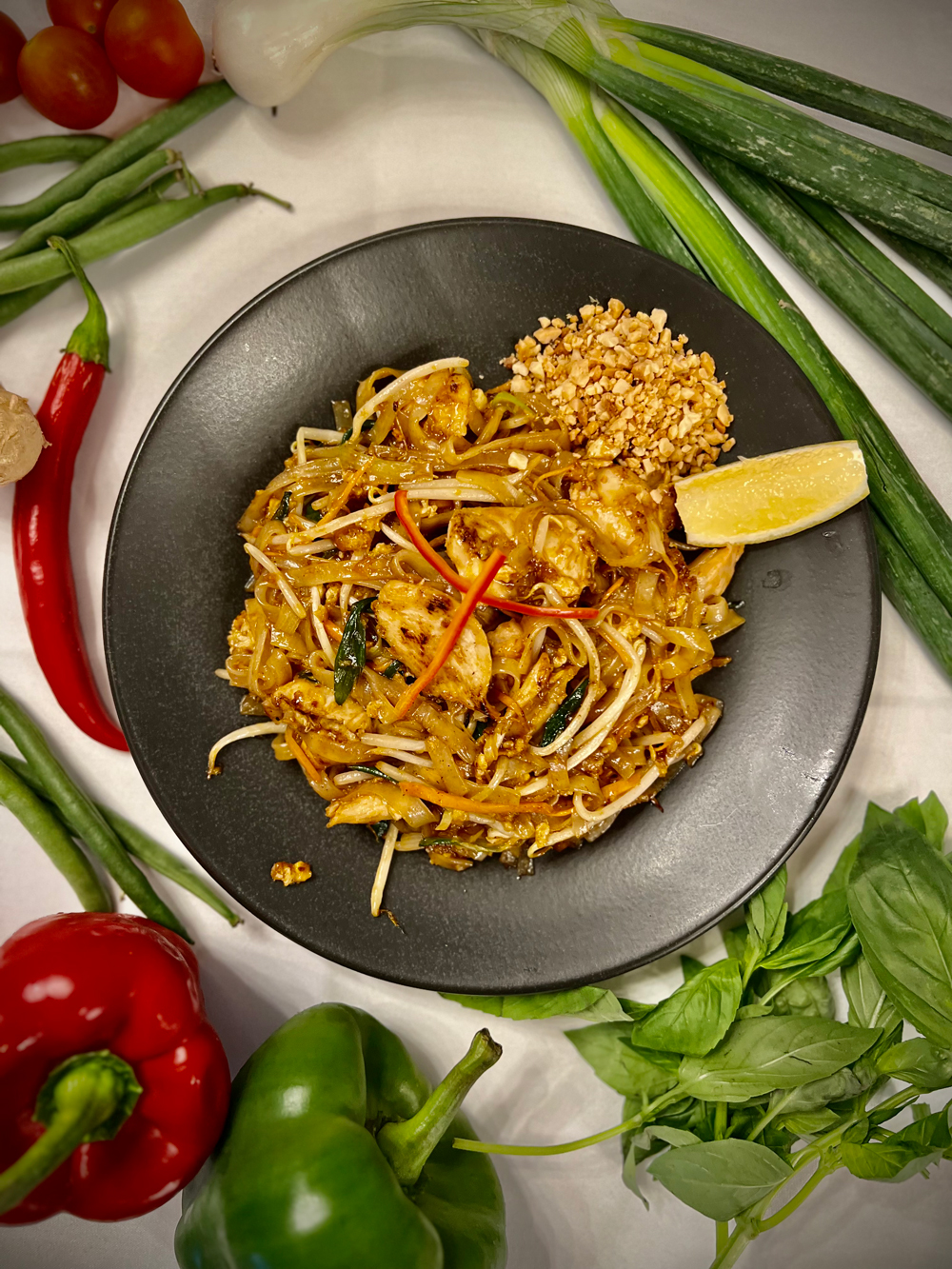
Toss in bean sprouts, spring onion, and pickled radish (if using). Stir everything together for another minute. - Plate and Garnish:
Serve hot, topped with crushed peanuts and a lime wedge on the side.
🇹🇭 Tips from Our Phuket Cooking School:
- Adjust the sauce to your taste—more sugar for sweetness, more tamarind for tanginess.
- Use a hot wok for the best texture and flavor.
- Don’t overcrowd the pan; cook in batches if needed.
Want to master this dish with hands-on guidance? Join our Thai Cooking Class in Phuket and learn to make Pad Thai and many more traditional recipes in a fun, welcoming kitchen with local chefs!
📍 Book your spot now and bring the flavors of Thailand into your own home!